ALI SPENCE
  • HOME
  • ABOUT ME
  • SERVICES
    • DOG WALKING
    • ALL DAY WALKING
    • CANINE COACHING
    • WEEKEND ADVENTURE WALKS
    • OWNER EDUCATION WALKS
    • HOUSE SITTING
    • PET FEEDING & MAINTENANCE VISITS
  • PRICES
  • TESTIMONIALS
  • CONTACT
  • GALLERY
  • LINKS
  • BLOG
  • PRIVACY
  • HOME
  • ABOUT ME
  • SERVICES
    • DOG WALKING
    • ALL DAY WALKING
    • CANINE COACHING
    • WEEKEND ADVENTURE WALKS
    • OWNER EDUCATION WALKS
    • HOUSE SITTING
    • PET FEEDING & MAINTENANCE VISITS
  • PRICES
  • TESTIMONIALS
  • CONTACT
  • GALLERY
  • LINKS
  • BLOG
  • PRIVACY
Search by typing & pressing enter

YOUR CART
5/21/2021 0 Comments

The Top 5 Complementary Therapies for Dogs

Picture
Complementary Therapies are a useful addition to medical treatment from your vet.  Their usage has grown in the general population in the last 40 years and they are now used widely for both humans and animals. There are many therapies available that are beneficial to dogs.  Here are the most popular:

Homeopathy

This therapy works by introducing a substance that is similar to the symptoms being experienced by the animal – therefore treating ‘like with like’. A homeopathic practitioner makes pills, creams, or ointments that have a substance that is highly diluted and shaken at high speed. Each animal is treated as an individual and looked at holistically (mental, emotional, and physical). These preparations are available to buy from health shops in low dosages but for higher potency, a homeopath must prescribe them. It is noteworthy that some of the substances used within homeopathy and toxic in high doses and therefore a qualified practitioner should be sought. ​

Bach Flower Essences

This therapy uses the essence of flowers in a tincture form. Edward Bach discovered that plants mixed with sunlight could be used to resolve mental and emotional issues. The essence is either dropped into water or directly into the mouth; both humans and dogs. They can also be massaged or stroked onto a dog’s paws. Bach Flower Remedies are the most well-known flower essence remedy but not the only one. Within the Bach system, there are 38 different remedies; the best-known remedy is Rescue Remedy, which is made from a combination of essences. Remedies can be purchased over the counter however for good results it is best to see a practitioner for a prescription. None of the essences are toxic and can be used in conjunction with allopathic and homeopathic medicine.
Picture

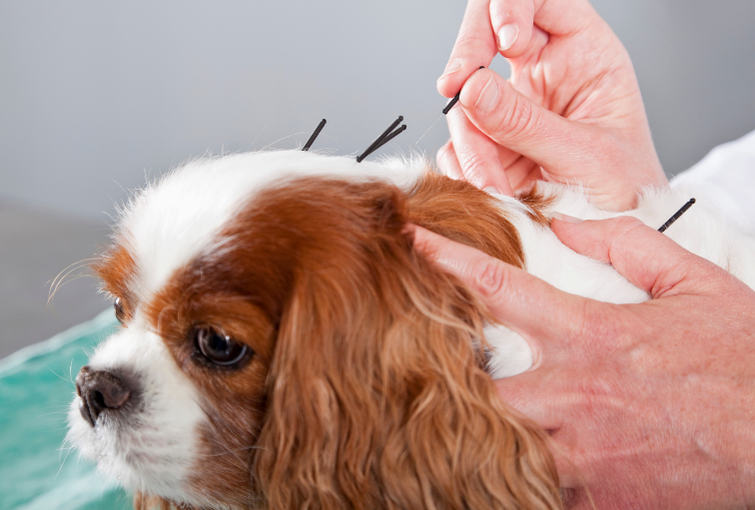
Acupuncture

This therapy involves the insertion of fine needles into specific points on the dog’s body (known as Acupoints). The purpose is to produce a balancing effect of the meridians (Traditional Chinese Medicine theory) or stimulation of the body’s natural repair mechanisms (Western Medicine theory). It is reported that 95% of dogs relax when this practice is carried out. UK Law states that only a qualified vet can perform Acupuncture on animals. This could perhaps explain the wider acceptance of this therapy as a legitimate treatment. There is a growing evidence base for the efficacy of Acupuncture in humans and clinical trials have been conducted for the use of Acupuncture in managing pain in animals.
​

Tellington Touch (T-Touch)

This therapy is a gentle and respectful method of training dogs and comprises: bodywork called T-Touch, groundwork exercises, T-Touch equipment, and Intention. T- Touch uses circular movements from the practitioner’s fingers and hands applied over the dog’s body. Linda Tellington-Jones the founder of the system states the purpose of T-Touch is to “stimulate the function and vitality of the cells in an animal’s body and to activate unused neural pathways to the brain.” It is possible to learn the movements from an instructor and there are a number of introductory courses run across the UK. There is some evidence-based research to support that T-Touch does have a relaxing effect on the parasympathetic nervous system and brain wave patterns.
​

Reiki

This is an energy-based therapy and works by the practitioner being able to channel universal energy (Chi/Qi) to promote an emotional, physical, psychological, and spiritual balance. The practitioner can lay hands on the recipient or send it via distance. When treating a dog it is usually done without hands-on practice even if the dog and guardian are in the same location as the practitioner.
 

Important Note

The Veterinary Act 1966 prevents unqualified persons from treating or diagnosing animals. Only a vet registered with the Royal College of Veterinary Surgeons can diagnose a medical condition. If we suspect that our dog is unwell we should get them examined by their vet to identify any underlying medical issues. Complementary Therapies are not an alternative to medical treatment.
 
Complementary Therapies are regarded as benign (Do No Harm) and therefore most vets will support their use, although some will regard them as bogus. Guardians must let their vet know that Complementary Therapies are being used.
0 Comments


Leave a Reply.

Location

Contact Us